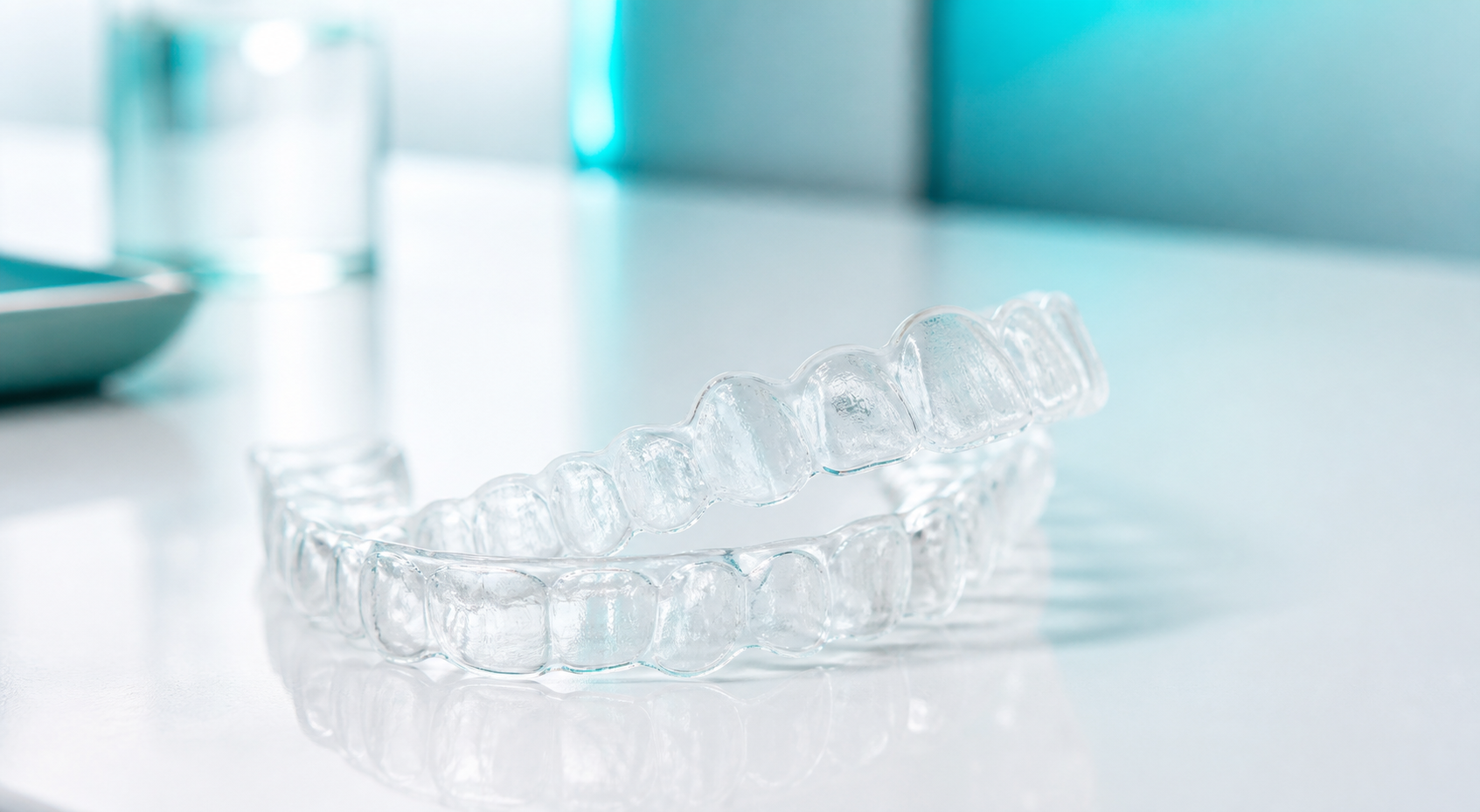
Invisalign Nanaimo: clear aligners Nanaimo BC and Invisalign cost Nanaimo guide

Use this Invisalign Nanaimo guide to compare clear aligners Nanaimo BC options, Invisalign cost Nanaimo factors, treatment timing, insurance, and provider questions.

$4,000-$8,000 Common comprehensive BC range before insurance.
6-18 months Typical active treatment window for many cases.
20-22 hrs Daily wear is usually needed for predictable movement.
Invisalign Nanaimo clear aligners Nanaimo BC trays with Invisalign cost Nanaimo planning context
Modern clear aligner therapy relies on careful diagnosis, digital planning, and consistent daily wear.

Invisalign Nanaimo, clear aligners Nanaimo BC, and Invisalign cost Nanaimo quick facts

Official Nanaimo Practice Nanaimo Smiles publishes its phone, address, and hours on its official website.
Published Contact Details Official contact information was checked against the clinic website.
2 Locations on Vancouver Island Nanaimo Smiles and Ladysmith Smiles support regional access.
Open Monday-Saturday Nanaimo Smiles lists 8:00 AM-4:00 PM hours on its official contact page.
Compare options

Invisalign vs traditional braces vs clear aligners

Invisalign is one clear aligner system, but patients also compare braces and other clear aligner brands. The best option depends on diagnosis and consistency.

Option Pros Cons Typical cost Typical duration
Invisalign Discreet, removable, digitally planned, easier brushing and flossing, fewer food restrictions. Requires 20-22 hours of wear, attachments may show, not ideal for every complex bite. $4,000-$8,000 for many comprehensive BC cases. 6-18 months for many cases, with refinements possible.
Traditional braces Fixed appliance works continuously, strong for complex movement, no tray compliance issue. More visible, harder to clean, food restrictions, wire or bracket irritation can happen. $4,000-$8,000+ depending on provider and complexity. 12-30 months depending on bite and goals.
Other clear aligners May be discreet and removable, sometimes lower cost for limited movement. Brand, supervision, refinements, and case selection vary widely. $2,000-$7,000+ depending on scope and monitoring. 3-18 months depending on case limits.
Retainers only Lower cost when teeth are stable and no active movement is planned. Does not correct crowding or bite problems; only maintains current position. $300-$800+ depending on retainer type and number. Long-term nightly wear after active treatment.
Expanded local guide

A clear aligner planning resource for adults and teens comparing Invisalign cost, timelines, financing, and retention in Nanaimo.

Invisalign timeline: month by month

Month zero is planning. Your provider checks gum health, cavities, bite, jaw joints, tooth wear, and any restorative needs before moving teeth. Photos, X-rays, and a digital scan help build the plan. This stage matters because moving teeth in an unhealthy mouth can create bigger problems than crooked teeth.

Months one to three are about adaptation and tracking. You learn how to remove trays, clean them, seat them fully, and manage tenderness after tray changes. Attachments may feel rough at first. Small speech changes usually improve. Early check-ins confirm that teeth are following the digital plan instead of falling behind.

Months four to nine are where many patients see visible change. The front teeth may look straighter before the bite is fully corrected, which is why stopping early is a mistake. Later months often refine rotations, spacing, midline, bite contacts, and overbite or overjet details. A refinement scan near the end is common when the first series gets close but not perfect.

Invisalign aftercare and retainers

Teeth move because bone remodels around them. After active Invisalign treatment, that biology does not simply switch off. Retainers hold the result while tissues stabilize and then protect against long-term relapse. Most patients need nightly retainer wear indefinitely after the initial full-time or part-time transition recommended by their provider.

Retainers should be cleaned daily, stored in a case, kept away from heat, and replaced when they crack, loosen, smell, or no longer fit. If a retainer feels tight after skipping nights, wear it and call your provider for advice. If it no longer seats fully, do not force it; teeth may have shifted enough to need assessment.

Aftercare also means maintaining oral health. Keep hygiene visits, watch gum recession, avoid using aligners or retainers as whitening trays unless instructed, and ask about night grinding if retainers wear quickly.

Financing Invisalign in Nanaimo

Invisalign is often a planned investment rather than a one-visit purchase. Ask for a written estimate that separates records, aligners, progress visits, refinements, replacement trays, retainers, whitening, and any dental work needed before treatment. This prevents surprises and makes insurance conversations easier.

Some dental benefit plans include orthodontic coverage, but rules vary. Plans may have age limits, lifetime maximums, waiting periods, or reimbursement schedules. A predetermination can clarify what the insurer expects to pay, but approval does not guarantee that every future change is covered.

If you do not have orthodontic benefits, ask about payment timing, staged deposits, monthly payments, or third-party financing. Nanaimo Smiles can be contacted at (250) 591-6000 to discuss consultation timing and payment options before you commit to treatment.

Practical planning

How to prepare before you book

Use these short planning prompts to make a first call, urgent visit, or treatment estimate more productive. The goal is to leave the appointment with fewer unknowns.

Consultation questions

Ask what tooth movements are predictable, what could need refinements, and whether braces would be more reliable.

Daily wear plan

Identify where trays will be stored during meals, how you will clean them, and how you will track 20-22 hours.

Eating and drinking

Remove trays for anything except water, brush or rinse before reinserting, and avoid heat that warps plastic.

Attachment expectations

Ask where attachments will be placed, how visible they may be, and what happens if one falls off.

Refinement plan

Confirm whether refinements are included, how many are typical, and what triggers a new scan.

Retention budget

Ask what retainers are included, how replacements are priced, and how long nightly wear is expected.

Authoritative decision library

Detailed planning notes for Nanaimo Invisalign Guide

Patients often search for a single answer, but dental decisions usually combine symptoms, diagnosis, benefits, timing, budget, and comfort. This decision library gives readers more context before they call a clinic, compare estimates, or decide whether a concern is urgent.

Diagnosis before price

A useful estimate starts with diagnosis, not a menu price. Ask what information is still missing before relying on a range.

In the context of Nanaimo Invisalign Guide, this question helps patients move from a vague search to a concrete appointment conversation.

X-rays with purpose

Radiographs should answer a specific clinical question such as decay depth, bone support, infection, root shape, or impacted teeth.

In the context of Nanaimo Invisalign Guide, this question helps patients move from a vague search to a concrete appointment conversation.

Gum measurements

Bleeding, pocket depths, recession, and bone support affect cleaning frequency, restorative planning, and long-term tooth stability.

In the context of Nanaimo Invisalign Guide, this question helps patients move from a vague search to a concrete appointment conversation.

Treatment priority

Ask the team to separate urgent, important, elective, and monitor-only findings so you can plan in a sensible order.

In the context of Nanaimo Invisalign Guide, this question helps patients move from a vague search to a concrete appointment conversation.

Material choices

Fillings, crowns, night guards, retainers, and implants can involve different materials, lab steps, timelines, and maintenance needs.

In the context of Nanaimo Invisalign Guide, this question helps patients move from a vague search to a concrete appointment conversation.

Pain management

Local anesthetic, appointment pacing, topical anesthetic, breaks, and clear stop signals can make care more manageable.

In the context of Nanaimo Invisalign Guide, this question helps patients move from a vague search to a concrete appointment conversation.

Benefit predetermination

For larger care, a predetermination can clarify expected reimbursement before treatment begins.

In the context of Nanaimo Invisalign Guide, this question helps patients move from a vague search to a concrete appointment conversation.

Direct billing

Direct billing can reduce paperwork, but patients are still responsible for any balance not paid by the insurer.

In the context of Nanaimo Invisalign Guide, this question helps patients move from a vague search to a concrete appointment conversation.

Canadian Dental Care Plan

CDCP eligibility, covered services, co-payments, and provider participation should be verified before assuming costs are covered.

In the context of Nanaimo Invisalign Guide, this question helps patients move from a vague search to a concrete appointment conversation.

Second opinions

A second opinion can be useful for complex, expensive, cosmetic, or irreversible treatment decisions.

In the context of Nanaimo Invisalign Guide, this question helps patients move from a vague search to a concrete appointment conversation.

Specialist referrals

Referral is a strength when a specialist can provide safer, faster, or more predictable care than a general office.

In the context of Nanaimo Invisalign Guide, this question helps patients move from a vague search to a concrete appointment conversation.

Maintenance schedule

Recall intervals should reflect gum health, cavity risk, orthodontics, dry mouth, medical history, and home care.

In the context of Nanaimo Invisalign Guide, this question helps patients move from a vague search to a concrete appointment conversation.

Dental anxiety

Tell the office what makes appointments difficult so the team can plan communication, timing, and comfort supports.

In the context of Nanaimo Invisalign Guide, this question helps patients move from a vague search to a concrete appointment conversation.

Accessibility needs

Parking, mobility, sensory concerns, caregiver involvement, and appointment length all affect whether care is realistic.

In the context of Nanaimo Invisalign Guide, this question helps patients move from a vague search to a concrete appointment conversation.

Records transfer

Previous X-rays, treatment notes, prescriptions, and specialist letters can reduce duplication and improve planning.

In the context of Nanaimo Invisalign Guide, this question helps patients move from a vague search to a concrete appointment conversation.

Follow-up symptoms

Before leaving, ask which symptoms are normal, which are urgent, and how quickly improvement should happen.

In the context of Nanaimo Invisalign Guide, this question helps patients move from a vague search to a concrete appointment conversation.

Home-care fit

The best advice is the advice you can repeat. Ask for alternatives if a tool, product, or routine is not working.

In the context of Nanaimo Invisalign Guide, this question helps patients move from a vague search to a concrete appointment conversation.

Timing around travel

Mention upcoming trips, surgery, exams, or events because temporary treatment may not be suitable before travel.

In the context of Nanaimo Invisalign Guide, this question helps patients move from a vague search to a concrete appointment conversation.

Medication review

Blood thinners, bisphosphonates, diabetes medications, immunosuppressants, and dry-mouth medications can change dental planning.

In the context of Nanaimo Invisalign Guide, this question helps patients move from a vague search to a concrete appointment conversation.

Lab timelines

Crowns, night guards, aligners, dentures, and retainers may need lab time, remakes, or try-in visits.

In the context of Nanaimo Invisalign Guide, this question helps patients move from a vague search to a concrete appointment conversation.

Written estimates

A written estimate should explain procedure codes, lab fees, likely insurance contribution, and expected patient portion.

In the context of Nanaimo Invisalign Guide, this question helps patients move from a vague search to a concrete appointment conversation.

Staged treatment

When budget or time is tight, ask what can be stabilized first and what can safely wait.

In the context of Nanaimo Invisalign Guide, this question helps patients move from a vague search to a concrete appointment conversation.

Prevention after repair

A new filling, crown, aligner plan, or extraction should come with a prevention plan so the problem does not repeat.

In the context of Nanaimo Invisalign Guide, this question helps patients move from a vague search to a concrete appointment conversation.

Communication style

Choose a clinic that explains options plainly and documents the plan, not one that rushes you into a decision.

In the context of Nanaimo Invisalign Guide, this question helps patients move from a vague search to a concrete appointment conversation.

Scenario guide

Common situations and the question to ask next

Use this table to turn a symptom or goal into a practical conversation. It is not a diagnosis, but it helps patients describe the problem clearly and understand what information the dental team may need.

Situation Why it matters Question to ask
New patient with no pain Build a baseline exam, gum chart, X-rays if needed, and hygiene plan. Ask what is healthy, what is being watched, and what should be treated first.
Pain that wakes you at night Night pain can suggest nerve inflammation or infection. Ask whether you need urgent diagnosis, root canal assessment, extraction discussion, or medication guidance.
Swelling or fever Swelling can become medically serious if it spreads. Ask whether dental care is enough or whether emergency medical care is safer.
Broken tooth with sharp edge Sharp or cracked enamel can cut soft tissue and worsen under chewing force. Ask whether smoothing, bonding, crown, root canal, or extraction is likely.
Lost filling Open tooth structure can become sensitive, decay further, or fracture. Ask how quickly it should be restored and whether temporary material is appropriate.
Lost crown The tooth underneath may be vulnerable to decay, movement, or fracture. Bring the crown and ask whether it can be recemented or needs replacement.
Bleeding gums Bleeding often signals inflammation, gum disease, or home-care challenges. Ask whether you need routine hygiene, periodontal therapy, or shorter recall intervals.
Dry mouth Low saliva raises cavity risk and can affect dentures, speech, taste, and comfort. Ask about medication causes, fluoride, saliva substitutes, and hydration habits.
Grinding or clenching Bite force can crack teeth, wear enamel, and strain jaw muscles. Ask whether a night guard, bite review, or stress-related habit plan is appropriate.
Child first visit Early visits prevent fear and help parents learn risk-specific home care. Ask about fluoride amount, brushing help, snacks, pacifiers, and recall timing.
Teen orthodontic questions Crowding, bite development, wisdom teeth, and hygiene habits often converge in teen years. Ask whether monitoring, Invisalign, braces, or specialist referral fits best.
Invisalign interest Aligners require healthy gums, realistic goals, and consistent wear. Ask what movements are predictable and what could require refinements or braces.
Whitening interest Whitening works best after cleaning and before matching new visible restorations. Ask whether stains are external, internal, restorative, or related to enamel defects.
Missing tooth Replacement timing affects chewing, neighbouring teeth, bite stability, and bone. Ask about implant, bridge, partial denture, or leaving the space monitored.
Senior denture sore Sores can affect nutrition and may signal fit problems or tissue changes. Ask whether adjustment, reline, replacement, or tissue assessment is needed.
Medical condition change New diagnoses and medications can alter dental risk and treatment timing. Ask whether your dentist needs physician information before procedures.
No insurance Treatment can often be planned in stages when priorities are clear. Ask about payment options, CDCP eligibility, and what care should happen first.
Large treatment plan Complex plans are easier to understand when broken into phases. Ask for a written sequence with goals, timing, alternatives, and estimates.
Before travel Temporary fixes may not be reliable enough for remote travel. Ask what could flare up while away and what should be handled before departure.
After extraction Bleeding, clot protection, pain control, and follow-up instructions matter. Ask what is normal, when to call, and when replacement options should be discussed.
After a crown Temporary crowns and final crowns have different care instructions. Ask what to avoid, how long numbness lasts, and when sensitivity should improve.
After root canal Pain may improve gradually, but the tooth often still needs a final restoration. Ask whether a crown is needed and how soon the tooth should be protected.
After aligners Retainers protect the result after active movement stops. Ask how often to wear retainers, how to clean them, and what replacement costs.
Ongoing maintenance Dental risk changes with age, health, habits, and previous treatment. Ask at each visit whether your recall interval or home-care tools should change.
Preparation checklist

Before, during, and after your dental appointment

A prepared patient can usually get clearer answers in less time. Keep this checklist nearby before a first visit, emergency call, Invisalign consultation, family appointment, or larger treatment estimate.

  • Write down your top three concerns before calling.
  • List all prescription and non-prescription medications.
  • Bring private insurance card details and the policy holder date of birth if needed.
  • Mention pregnancy, diabetes, heart conditions, joint replacements, immune concerns, or blood thinners.
  • Tell the team if you have had a difficult dental experience before.
  • Ask whether X-rays from a previous clinic can be transferred.
  • Clarify whether the visit is urgent, preventive, cosmetic, orthodontic, or consultation-only.
  • Ask how long the appointment is expected to take.
  • Confirm parking, building access, and whether a support person can attend.
  • Ask what amount is due at the appointment if benefits do not pay immediately.
  • Request a written estimate before non-urgent treatment.
  • Ask whether a predetermination is useful for major care.
  • Discuss payment timing before starting multi-visit treatment.
  • Ask what symptoms should improve after treatment and by when.
  • Keep post-treatment instructions where you can find them.
  • Schedule follow-up before leaving if the treatment requires it.
  • Keep retainers, night guards, dentures, and aligners in labeled cases.
  • Update the office when your medical history changes.
  • Use the same questions when comparing clinics so the comparison is fair.
  • Call promptly if pain, swelling, bleeding, or a bite change gets worse.
  • Save broken tooth pieces, crowns, aligners, or appliances and bring them with you.
  • Avoid chewing on a damaged tooth until it is assessed.
  • Use emergency medical care for airway risk, facial trauma, or uncontrolled bleeding.
  • Ask when routine prevention should resume after urgent care.
Patient question bank

More questions patients ask before booking

The answers below are general education for Nanaimo and Vancouver Island patients. They should be confirmed with a dentist who has reviewed your mouth, medical history, X-rays, and goals.

How should I compare two dental estimates?

Compare diagnosis, procedure codes, materials, lab fees, number of visits, what is included, what is optional, and what happens if the tooth or treatment plan changes. For personalized guidance, contact Nanaimo Smiles at (250) 591-6000.

What does direct billing mean?

Direct billing means the clinic submits a claim to the insurer on your behalf. It does not guarantee the insurer will pay everything, so confirm the patient portion. For personalized guidance, contact Nanaimo Smiles at (250) 591-6000.

When should I ask for a written treatment plan?

Ask for a written plan for crowns, implants, Invisalign, dentures, gum treatment, root canals, multiple fillings, or any care you want time to consider. For personalized guidance, contact Nanaimo Smiles at (250) 591-6000.

What if I am embarrassed about delayed care?

Dental teams see delayed care every day. Give honest history, ask for a staged plan, and focus on the next useful step rather than the past. For personalized guidance, contact Nanaimo Smiles at (250) 591-6000.

How do I know if a dental problem is urgent?

Swelling, fever, spreading infection, trauma, uncontrolled bleeding, severe pain, or a knocked-out adult tooth should be triaged quickly. For personalized guidance, contact Nanaimo Smiles at (250) 591-6000.

Can dental care be phased?

Often yes. Stabilization, infection control, hygiene, definitive restorations, cosmetic work, and maintenance can sometimes be sequenced over time. For personalized guidance, contact Nanaimo Smiles at (250) 591-6000.

What should I bring to a first appointment?

Bring insurance details, medication list, allergies, previous dental records if available, health history, main concerns, and questions about cost or timing. For personalized guidance, contact Nanaimo Smiles at (250) 591-6000.

How often do I need cleanings?

Many patients do well around six months, but gum disease, braces, dry mouth, high cavity risk, or medical factors may require different intervals. For personalized guidance, contact Nanaimo Smiles at (250) 591-6000.

Are online reviews enough to choose a dentist?

Reviews are useful for patterns, but they should be combined with licensing, services, hours, estimates, communication, and how the clinic answers your questions. For personalized guidance, contact Nanaimo Smiles at (250) 591-6000.

What if my insurance denies coverage?

Ask whether an appeal, alternate benefit, staged care, different material, or payment plan is possible. Clinical need and insurance coverage are not the same. For personalized guidance, contact Nanaimo Smiles at (250) 591-6000.

How do I prepare a child for the dentist?

Use calm, simple words and avoid threats or guarantees. Let the dental team explain tools and keep the visit age-appropriate. For personalized guidance, contact Nanaimo Smiles at (250) 591-6000.

What should I ask after treatment?

Ask what was done, what to expect, how to manage discomfort, what symptoms require a call, and when follow-up or maintenance is due. For personalized guidance, contact Nanaimo Smiles at (250) 591-6000.

Can I switch dental clinics later?

Yes. You can request records transfer and choose another provider if your needs, route, insurance, or comfort level changes. For personalized guidance, contact Nanaimo Smiles at (250) 591-6000.

Why do fees vary between clinics?

Fees can vary because BC dental offices set their own fees and because complexity, materials, lab work, appointment time, and technology differ. For personalized guidance, contact Nanaimo Smiles at (250) 591-6000.

Interactive tools

Estimate costs and check insurance basics

These tools are educational starting points for Nanaimo patients. They do not replace an exam, X-rays, written estimate, or benefit predetermination.

Dental cost estimator

Cleaning: $150-250
Insurance often covers preventive cleanings, subject to recall frequency and plan limits.

Prices are estimates based on BC Dental Association fee guides. Contact Nanaimo Smiles at (250) 591-6000 for exact pricing.

Dental insurance checker

Ask Nanaimo Smiles or Ladysmith Smiles whether your plan can be billed directly. Contact your preferred clinic to verify coverage before treatment.

For no-insurance patients, ask about payment plans, staged care, and Canadian Dental Care Plan eligibility before treatment begins.

Procedure Nanaimo estimate Insurance notes
Cleaning: $150-250 $150-250 Usually covered under preventive benefits, often subject to recall limits.
Filling: $150-350 $150-350 Often covered as basic restorative care, with plan limits by tooth and surface.
Crown: $800-1,500 $800-1,500 Often covered as major dental care after deductibles, annual maximums, and plan rules.
Root Canal: $700-1,200 $700-1,200 Often covered as endodontic treatment, but coverage varies by tooth and plan.
Extraction (simple): $150-300 $150-300 Often covered as basic oral surgery when clinically required.
Extraction (surgical): $250-500 $250-500 May be covered differently than a simple extraction; pre-estimates help.
Invisalign: $4,000-8,000 $4,000-8,000 Only covered when orthodontic benefits are included, often with a lifetime maximum.
Whitening: $300-600 $300-600 Usually considered cosmetic and not commonly covered by insurance.
Dental Implant: $3,000-6,000 $3,000-6,000 Coverage varies widely; some plans exclude implants or cover a bridge allowance instead.
Veneers (per tooth): $800-2,000 $800-2,000 Usually cosmetic unless part of a covered restorative plan.
Night Guard: $300-500 $300-500 Often partially covered when prescribed for grinding or clenching.
Children's Cleaning: $100-200 $100-200 Often covered under dependent preventive benefits or eligible public programs.
Request care

Contact or appointment request

Use this form to request a call from Vanisle Smiles. If you have swelling, severe pain, trauma, or symptoms that are getting worse, call directly instead of waiting for an email response.

A member of the Vanisle Smiles team will contact you within 24 hours.

Nanaimo Smiles location

Located at 101-2700 Norwell Drive, Nanaimo, BC V9T 1X3. Check the official map for current routing before leaving.

(250) 591-6000 for Nanaimo Smiles appointments and triage.

Ladysmith Smiles location

Located at 225 High Street, PO Box 1499, Ladysmith, BC V9G 1B1. Check the official site for current routing before leaving.

(250) 245-8558 for Ladysmith Smiles appointments and triage.

Review checks

Public review checklist

Use these prompts when reading current public reviews. Ratings and comments can change, so verify the current profile before booking.

Check
Check whether Invisalign reviews mention cost, timing, and suitability explanations.
Review checklist · Verify current public reviews
Check
Check whether aligner patients mention progress checks and practical tray-wear guidance.
Review checklist · Verify current public reviews
Check
Check whether adult patients mention clear planning around whitening, retainers, and restorative timing.
Review checklist · Verify current public reviews
Check
Check whether reviews mention benefits communication and appointment scheduling.
Review checklist · Verify current public reviews

What is Invisalign?

Invisalign is a clear aligner system used to move teeth gradually with a planned series of removable trays. Each tray is custom-made to fit over the teeth and apply controlled pressure in specific directions.

Unlike braces, aligners do not use fixed brackets or arch wires. You remove them to eat, drink anything other than water, brush, and floss. The tradeoff is responsibility: aligners only work when they are worn as prescribed, often 20 to 22 hours a day.

In Nanaimo, Invisalign may be offered by general dentists with clear aligner training and by orthodontists. Mild crowding, small spacing, relapse after braces, and some cosmetic alignment goals may fit a general dental setting. Complex bite concerns, impacted teeth, major rotations, or jaw growth issues may call for orthodontic referral.

How Invisalign works: a practical timeline

Every case is individual, but most patients follow a similar sequence from first conversation to long-term retention. A clear timeline helps you understand where fees come from and what you are committing to.

Consultation and suitability screening

Your provider reviews your goals, health history, bite, gum health, jaw joints, and any past orthodontic treatment. Expect photos, an exam, and a discussion about whether aligners can meet your goals.

Records and digital scan

Many offices use an intraoral scanner instead of traditional impressions. X-rays may be needed to assess roots, bone levels, unerupted teeth, or pathology before tooth movement begins.

Treatment plan and preview

The provider reviews and adjusts the digital simulation. A good plan considers bite contacts, tooth angulation, gum limits, and whether the final position can be retained.

Aligner delivery and attachments

Small tooth-coloured attachments may be bonded to selected teeth so trays grip better. You will learn how to insert, remove, clean, and store the aligners.

Active wear and progress visits

Patients often change trays every one to two weeks. Checkups confirm that teeth are tracking, attachments are intact, and refinements are not needed early.

Refinement and retention

Many cases need a refinement set near the end. After active movement, retainers are essential because teeth naturally try to shift.

Who is a good candidate?

Invisalign can suit teens and adults with mild to moderate crowding, spacing, rotations, narrow smile concerns, or relapse after previous orthodontics. It can also help with some bite patterns.

Good candidates are realistic, consistent, and willing to return for monitoring. Treatment can stall if trays are left out too often, so patients unlikely to track wear time may do better with fixed braces.

Before tooth movement, cavities, gum disease, cracked teeth, failing restorations, or unstable bite problems should be addressed.

Best fit

Mild to moderate alignment needs, good oral health, and strong daily wear habits.

Use caution

Active gum disease, untreated decay, severe bite issues, or inconsistent appliance wear.

Teen factors

Maturity, sports, school routines, lost trays, and parent support all affect success.

How much does Invisalign cost in BC?

In British Columbia, many comprehensive Invisalign cases fall roughly between $4,000 and $8,000, although limited cosmetic movement may cost less and complex orthodontic treatment can cost more.

The final fee depends on complexity, aligner count, refinements, records, monitoring visits, retainers, and whether dental work is needed. Fees vary because BC dentists set their own fees.

$4k-$8kTypical comprehensive treatment range in BC

Dental insurance may cover treatment only if your plan includes orthodontic benefits. Coverage may have a lifetime maximum, age restrictions, waiting periods, or scheduled reimbursement. Ask for a written estimate and confirm whether records, refinements, replacement trays, and retainers are included.

Invisalign vs braces

Both Invisalign and braces can produce excellent results when planned and monitored well. The better choice depends on the movement required, lifestyle, and compliance.

Factor Invisalign clear aligners Traditional braces
Appearance Very discreet, though attachments may show close up. Visible brackets and wires; ceramic options are subtler.
Eating Remove trays for meals; few food restrictions. Sticky, hard, or crunchy foods may be limited.
Cleaning Brush and floss normally; trays also need cleaning. Brackets require careful brushing and floss tools.
Compliance Depends on wearing trays most of the day. Fixed appliances work continuously; elastics may matter.
Complexity Strong for many mild to moderate cases. Often preferred for complex movement or severe bites.
Appointments May involve fewer adjustment-style visits. Regular wire changes or adjustments are expected.

Frequently asked questions

These answers are general education. Your provider should tailor advice to your health history.

How should I compare Invisalign Nanaimo, clear aligners Nanaimo BC, and Invisalign cost Nanaimo options?

Compare Invisalign Nanaimo options by asking who plans treatment, how progress is monitored, whether refinements and retainers are included, and how bite goals are handled. Clear aligners Nanaimo BC fees vary by complexity, records, treatment length, insurance, financing, and retention, so ask Nanaimo Smiles for a written Invisalign cost Nanaimo estimate before starting.

How much does Invisalign cost in Nanaimo, BC?

In Nanaimo and elsewhere in BC, many comprehensive Invisalign cases fall roughly between $4,000 and $8,000 before insurance, while limited movement may cost less and complex orthodontic treatment can cost more. Nanaimo Smiles can provide a consultation estimate that explains records, refinements, retainers, and payment timing.

Does Nanaimo Smiles offer free Invisalign consultations?

Nanaimo Smiles offers Invisalign consultations for patients comparing clear aligners, braces, oral health needs, and treatment timing. Consultation fees and promotions can change, so patients should ask the clinic directly whether a free Invisalign consultation is currently available.

How long does Invisalign treatment take in Nanaimo?

Many Invisalign cases take about 6 to 18 months, but timing depends on tooth movement, bite complexity, tray wear, refinements, and monitoring visits. Nanaimo Smiles can estimate timing after reviewing your teeth, gums, bite, and goals.

Is Invisalign covered by dental insurance in BC?

Some BC dental plans cover Invisalign as orthodontic treatment, but coverage varies by age limits, lifetime orthodontic maximums, waiting periods, and exclusions. Ask Nanaimo Smiles for an estimate and request a predetermination from your insurer before starting treatment.

What's the difference between Invisalign and braces for adults in Nanaimo?

Invisalign uses removable clear aligners that are discreet and easier to clean around, while braces use fixed brackets and wires that can be more predictable for certain complex movements. Adults in Nanaimo should compare appearance, cost, bite complexity, daily wear discipline, appointment timing, and retention before choosing.

Can teenagers get Invisalign at Nanaimo Smiles?

Some teenagers can get Invisalign if their teeth, bite, oral hygiene, maturity, and daily wear habits make clear aligners appropriate. Nanaimo Smiles can review teen suitability and explain whether Invisalign, braces, or orthodontic referral is the better option.

Finding an Invisalign provider in Nanaimo

Choose a provider who explains the cosmetic goal and bite goal. You should leave understanding your diagnosis, planned movements, timeline, limitations, and retention plan.

If you are comparing local options, Nanaimo Smiles offers Invisalign consultations and can help patients understand whether clear aligners fit their goals, oral health, and schedule.

Useful questions include: Who modifies the digital plan? How often is progress monitored? Are refinements included? What retainers are provided? What if teeth do not track? What could cost extra?

The right provider is not simply the lowest quote. It is the clinician who explains clearly, identifies limitations early, monitors carefully, and protects the result with retention.

Helpful official resources

Nanaimo dentist resources and Vancouver Island dental care links

Use these practice and resource links to compare Vancouver Island dental care, a Nanaimo dentist at Nanaimo Smiles Dental, and a Ladysmith dental clinic through Ladysmith Smiles.